

HEALTHY HEARING
Your hearing affects how you connect with people, enjoy music, stay safe, and feel confident in everyday life. Whether you’re dealing with ringing, pressure, muffled sounds, or just want to protect your ears as you age, this page gives you simple, free ways to support your hearing naturally. No pressure, no expensive treatments — just gentle guidance anyone can follow.


⭐ What’s Good for Hearing
🔹 1. Gentle, Daily Movement
Walking improves blood flow to the ears and supports the tiny nerves responsible for hearing.
🔹 2. Staying Hydrated
Good hydration helps maintain fluid balance in the inner ear, which affects sound clarity.
🔹 3. Foods Rich in Antioxidants
Blueberries, leafy greens, citrus, and nuts help protect ear cells from damage.
🔹 4. Magnesium & Zinc
These minerals support nerve health and may help reduce noise‑related hearing stress.
🔹 5. Lowering Stress Levels
Stress tightens muscles around the ears and can worsen tinnitus. Calm breathing helps.
🔹 6. Clean, Safe Ear Care
Gentle cleaning around the outer ear (not inside the canal) helps prevent irritation.
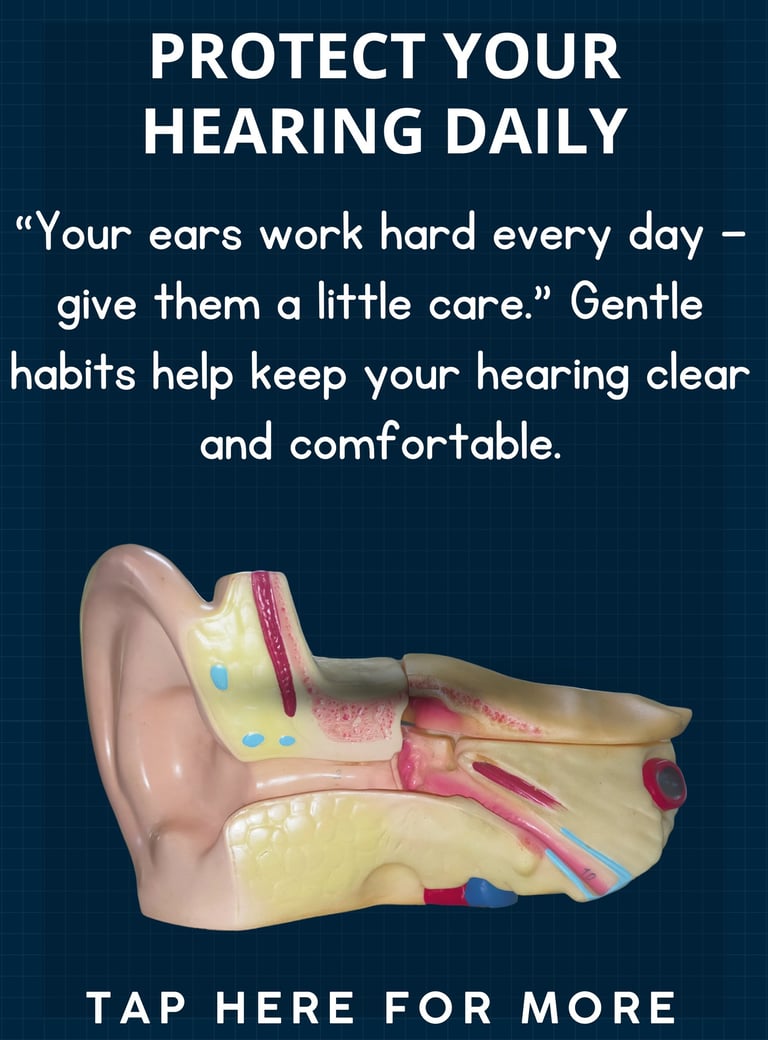
Natural Hearing Support Supplement
clearer hearing
ear circulation
nerve health
age‑related hearing decline
What’s Bad for Hearing
❌ 1. Loud Noise Exposure
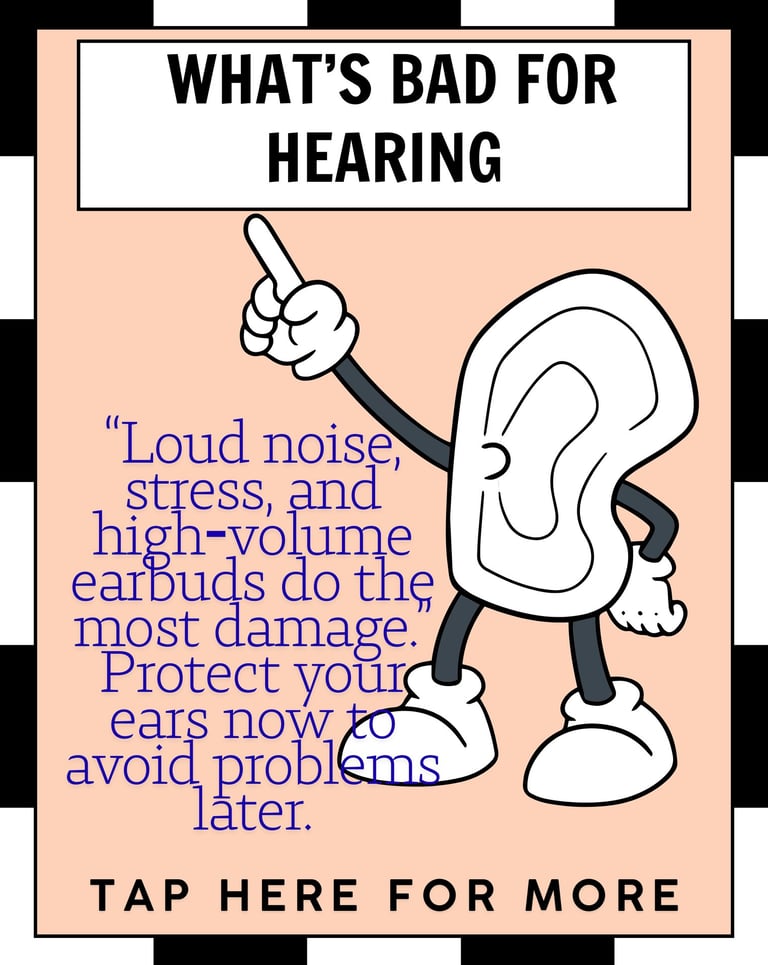
Concerts, machinery, earbuds at high volume — these damage inner‑ear hair cells.
❌ 2. Earbuds at Full Volume
Anything above 60% volume for long periods can reduce hearing clarity over time.
❌ 3. Chronic Stress
Stress increases inflammation and can make ringing or buzzing worse.
❌ 4. Smoking & Heavy Alcohol
Both reduce blood flow to the ears and affect nerve pathways.
❌ 5. Sticking Objects in Your Ear
Cotton buds, bobby pins, or anything inserted into the ear canal can cause injury.
❌ 6. Ignoring Ear Infections
Untreated infections can lead to long‑term hearing changes.


Tinnitus Relief Program
ringing in ears
buzzing
humming
ear pressure
Hearing Health — Myth vs Fact
Myth: Hearing loss only happens to older people.
Fact: Noise, stress, and lifestyle habits affect hearing at any age.
Myth: Earwax means your ears are dirty.
Fact: Earwax protects your ear canal — removing too much can cause problems.
Myth: Tinnitus means you’re losing your hearing.
Fact: Tinnitus can come from stress, circulation, jaw tension, or ear pressure.
Myth: Louder earbuds give better sound quality.
Fact: High volume damages hearing — clarity comes from balanced sound, not loudness.
Myth: You should clean inside your ears.
Fact: The ear canal cleans itself — cleaning inside can cause irritation or injury.
Brain & Ear Connection Products
brain inflammation
nerve pathways
stress‑related ear issues
Easy Tips for Better Hearing
🔹 1. Follow the 60/60 Rule
Keep earbuds at 60% volume for no more than 60 minutes at a time.
🔹 2. Take “Quiet Breaks”
Give your ears 5 minutes of silence every few hours to reset.
🔹 3. Relax Your Jaw
Jaw tension affects the ear muscles — a 20‑second jaw release helps.
🔹 4. Stay Hydrated
Small sips throughout the day support inner‑ear fluid balance.
🔹 5. Add Antioxidant Foods
A handful of nuts, berries, or greens helps protect ear cells.
🔹 6. Use Over‑Ear Headphones
They reduce pressure and are safer than in‑ear earbuds.
🔹 7. Manage Stress Gently
Slow breathing, stretching, or quiet time can reduce ringing and buzzing.
Herbal Ear Health Remedies
These are natural formulas that claim to help with:
earwax buildup
ear infections
ear discomfort
pressure relief


⭐ Best Foods for Healthy Hearing (Clarity, Comfort, Long‑Term Ear Support)
🫐 1. Antioxidant‑Rich Foods (Inner‑Ear Protection)
Antioxidants help protect the tiny hair cells inside your ears that control hearing. Examples: blueberries, strawberries, spinach, turmeric, green tea. Benefits: reduced inflammation, better sound clarity, long‑term ear protection.
🐟 2. Omega‑3 Foods (Blood Flow & Ear Nerve Support)
Omega‑3s support healthy circulation to the inner ear and help protect hearing nerves. Examples: salmon, sardines, mackerel, flaxseeds, chia seeds. Benefits: sharper hearing, reduced ringing, better nerve function.
🍊 3. Vitamin C Foods (Immune Support & Ear Healing)
Vitamin C helps reduce inflammation and supports the tissues inside the ear. Examples: oranges, kiwifruit, capsicum, strawberries. Benefits: better healing, reduced ear pressure, stronger immune defence.
🥬 4. Leafy Greens (Magnesium for Ear Protection)
Magnesium helps protect the inner ear from noise‑related stress. Examples: spinach, kale, silverbeet, broccoli. Benefits: reduced sensitivity, calmer ear nerves, better sound processing.
🫘 5. Zinc‑Rich Foods (Ear Immunity & Tissue Repair)
Zinc supports immune function and helps the ear recover from inflammation. Examples: pumpkin seeds, chickpeas, lentils, yoghurt. Benefits: reduced infections, better healing, improved ear comfort.
🥑 6. Healthy Fats (Nerve Strength & Sound Transmission)
Good fats support the nerves that carry sound signals to the brain. Examples: avocado, olive oil, nuts, seeds. Benefits: clearer sound, better nerve communication, reduced ringing.
🍌 7. Potassium‑Rich Foods (Fluid Balance in the Inner Ear)
Potassium helps regulate the fluid inside the cochlea — essential for hearing. Examples: bananas, oranges, potatoes, tomatoes. Benefits: improved sound balance, better hearing stability.
💧 8. Hydrating Foods (Ear Comfort & Pressure Balance)
Hydration supports inner‑ear fluid levels and reduces pressure. Examples: cucumber, watermelon, leafy greens, citrus fruits. Benefits: less ear fullness, smoother hearing, reduced dizziness.


Healthy Hearing — Expanded Section
Healthy Hearing FAQs (Expanded)
1. Why do my ears feel blocked or full?
A blocked feeling can come from earwax buildup, sinus pressure, allergies, or changes in air pressure. Gentle hydration, steam inhalation, and avoiding poking inside the ear canal often help ease the sensation.
2. Why do I hear ringing or buzzing (tinnitus)?
Tinnitus can be triggered by stress, loud noise exposure, jaw tension, circulation changes, or ear pressure. Calming the nervous system and reducing noise exposure often helps reduce intensity.
3. Why does my hearing feel muffled sometimes?
Muffled hearing can come from congestion, earwax, or temporary inflammation. Hydration, gentle movement, and avoiding loud environments help support clearer hearing.
4. Why do loud sounds bother me more than before?
Sound sensitivity can increase when the ears are stressed, tired, or recovering from noise exposure. Quiet breaks help reset the ear muscles and nerves.
5. Why do my ears pop so often?
Ear popping happens when the Eustachian tube equalises pressure. It’s common during altitude changes, sinus congestion, or allergies.
6. Why do I get earaches without infection?
Earaches can come from jaw tension, neck stiffness, sinus pressure, or inflammation. Relaxation and gentle stretching often help.
7. Can stress affect my hearing?
Yes — stress tightens muscles around the ears, increases inflammation, and can make ringing or pressure feel worse.
8. Why do my ears feel itchy?
Itching can come from dryness, mild irritation, or allergies. Avoid scratching inside the ear canal — the skin is delicate.
9. Why does my hearing feel worse when I’m tired?
Fatigue reduces focus and increases sensitivity to noise. Rest helps the auditory system recover.
10. How do I know if my hearing is improving?
You’ll notice clearer sound, less ringing, better comfort in noisy places, and fewer pressure sensations.
What Causes Hearing Discomfort & What Supports Ear Health (Expanded)
What Causes Hearing Discomfort
Everyday factors can affect how your ears feel:
Loud noise exposure
Stress and tension
Earwax buildup
Sinus congestion
Dehydration
Jaw clenching
Poor circulation
Long earbud use
Inflammation
These factors can make hearing feel strained, muffled, or sensitive.
What Supports Healthy Hearing
Your ears thrive when you support them with:
Hydration
Gentle daily movement
Lower stress levels
Balanced minerals (magnesium & zinc)
Quiet breaks
Healthy circulation
Safe listening habits
Proper ear care
Small daily habits create long‑term hearing comfort.
What Causes Hearing Discomfort & What Supports Ear Health (Expanded)
What Causes Hearing Discomfort
Everyday factors can affect how your ears feel:
Loud noise exposure
Stress and tension
Earwax buildup
Sinus congestion
Dehydration
Jaw clenching
Poor circulation
Long earbud use
Inflammation
These factors can make hearing feel strained, muffled, or sensitive.
What Supports Healthy Hearing
Your ears thrive when you support them with:
Hydration
Gentle daily movement
Lower stress levels
Balanced minerals (magnesium & zinc)
Quiet breaks
Healthy circulation
Safe listening habits
Proper ear care
Small daily habits create long‑term hearing comfort.


Best Foods for Hearing Health (Expanded)
1. Magnesium‑Rich Foods
Support nerve function and help protect ears from noise stress. Examples: almonds, spinach, pumpkin seeds.
2. Zinc‑Rich Foods
Support immune health and ear tissue repair. Examples: chickpeas, nuts, yoghurt.
3. Antioxidant‑Rich Foods
Protect inner‑ear cells from damage. Examples: berries, citrus fruits, leafy greens.
4. Omega‑3 Foods
Support circulation to the tiny nerves inside the ear. Examples: salmon, sardines, flaxseed.
5. Hydrating Foods
Help maintain inner‑ear fluid balance. Examples: cucumber, watermelon, oranges.
6. Vitamin‑B Foods
Support nerve pathways involved in hearing. Examples: eggs, whole grains, bananas.
7. Anti‑Inflammatory Foods
Help reduce pressure and irritation around the ears. Examples: turmeric, ginger, olive oil.
Healthy Hearing Statistics
1. Hearing Sensitivity
1 in 6 adults experience hearing sensitivity or discomfort.
Earbud overuse causes early hearing strain in over 50% of cases.
2. Tinnitus & Stress
Stress increases tinnitus intensity by up to 40%.
Quiet breaks reduce ear fatigue by 20–30%.
3. Hydration & Circulation
Hydration supports inner‑ear function by 10–15%.
Gentle movement improves ear circulation by 15–20%.
Daily Habits That Improve Hearing Comfort (Expanded)
1. Follow the 60/60 Rule
Keep earbuds at 60% volume for no more than 60 minutes at a time.
2. Take Quiet Breaks
Short moments of silence help reset the ear muscles and nerves.
3. Stay Hydrated
Water supports inner‑ear fluid balance and reduces pressure.
4. Relax Your Jaw
Jaw tension affects the ear canal — gentle jaw stretches help reduce ringing and pressure.
5. Reduce Stress
Calming the mind helps relax the muscles around the ears.
6. Use Over‑Ear Headphones
They reduce pressure and are safer than in‑ear earbuds.
7. Avoid Loud Environments
Protect your ears from sudden or prolonged noise.
8. Support Circulation
Walking and gentle movement help nourish the inner ear.
9. Keep Ears Dry & Clean (Safely)
Clean only the outer ear — never insert objects into the canal.
10. Sleep Well
Rest helps reduce inflammation and supports clearer hearing.


Natural Hearing Health Tips
Reduce exposure to loud noise whenever possible
Take breaks from headphones to rest your ears
Eat antioxidant‑rich foods like berries, spinach, and citrus
Stay hydrated to support inner‑ear fluid balance
Practice slow breathing to reduce stress‑related ear tension
Avoid inserting objects into your ears
Keep your blood pressure healthy to support ear circulation
Stretch your neck and shoulders to ease pressure around the ears
Limit caffeine if you experience ringing or sensitivity
Get regular movement to improve overall circulation
Explaining Natural Hearing Support
Healthy hearing helps you stay connected, confident, and aware of the world around you. Over time, noise, stress, and aging can affect the delicate structures inside the ears. Natural hearing support focuses on improving circulation, reducing inflammation, and protecting the inner ear — helping you maintain clearer, more comfortable hearing as you age.
⭐ Why Hearing Health Matters
Your ears do more than help you hear — they also support balance, focus, and daily communication. When hearing health weakens, you may notice ringing, muffled sounds, sensitivity, or difficulty understanding speech. Supporting your ears naturally helps protect the inner ear, improve sound clarity, and maintain long‑term hearing comfort.


Hearing Aids: Pros, Cons & What to Know
What Hearing Aids Do
Hearing aids are small devices that help amplify sound, making speech and everyday noises clearer. They don’t “fix” hearing loss, but they can make listening easier and reduce strain during conversations, work, or social situations.
⭐ Pros of Hearing Aids
Improved clarity — makes speech easier to understand
Less listening fatigue — reduces the effort needed to hear
Better social confidence — helps with conversations in groups
Modern designs are discreet — many are nearly invisible
Customizable settings — can be adjusted for different environments
Bluetooth options — connect to phones, TVs, and music
Supports long‑term brain health — reduces strain on memory and focus
⭐ Cons of Hearing Aids
Cost — good quality devices can be expensive
Adjustment period — takes time to get used to amplified sound
Battery or charging needs — requires regular maintenance
Background noise — some environments can still be challenging
Not a cure — they help hearing, but don’t restore natural hearing
May need professional fitting — to get the best results
⭐ Different Types of Hearing Aids
Behind‑the‑Ear (BTE) Strong, reliable, good for many levels of hearing loss.
Receiver‑in‑Canal (RIC) Very popular, small, comfortable, and discreet.
In‑the‑Ear (ITE) Custom‑molded to your ear, easy to insert and remove.
Completely‑in‑Canal (CIC) Very small and almost invisible, but less powerful.
⭐ Natural Ways to Support Hearing (Alongside Devices)
These are general wellness habits — not medical treatment:
Reduce loud noise exposure
Take breaks from headphones
Stay hydrated
Stretch neck and shoulders
Manage stress
Eat antioxidant‑rich foods
Keep blood pressure healthy
⭐ Important Note
If someone is experiencing ringing, muffled hearing, sudden changes, or ongoing discomfort, a qualified hearing professional should be consulted. They can check whether hearing aids are needed or if another issue is involved.
Types of Hearing Loss
Understanding the different types of hearing loss helps you recognise what might be affecting sound clarity or comfort. These are general categories that hearing professionals use to describe how the ears process sound.
1. Sensorineural Hearing Loss
This is the most common type and happens when the inner ear or hearing nerve becomes damaged. It can be caused by aging, loud noise, genetics, or long‑term stress on the ears. Sounds may seem muffled, unclear, or harder to understand — especially speech.
2. Conductive Hearing Loss
This type occurs when sound can’t travel properly through the outer or middle ear. It may be related to earwax buildup, fluid, or blockages. Sounds may feel quieter or “blocked,” but clarity often returns once the underlying issue is treated by a professional.
3. Mixed Hearing Loss
A combination of both sensorineural and conductive hearing loss. This means there is both inner‑ear sensitivity and something affecting sound movement through the outer or middle ear.
4. Age‑Related Hearing Changes
Over time, the tiny hair cells inside the ear naturally weaken. This can make high‑pitched sounds harder to hear and conversations more difficult to follow, especially in noisy places.
Healthy Hearing
What causes hearing loss?
Age, loud noise, genetics, stress, certain medications, and long‑term ear strain can all play a role.
Are hearing aids a cure?
No — hearing aids don’t restore natural hearing, but they can make sounds clearer and reduce listening effort.
Can loud noise damage hearing permanently?
Yes. Long or repeated exposure to loud noise can harm the inner ear over time.
Why do my ears ring sometimes?
Ringing (tinnitus) can be related to stress, noise exposure, circulation, or ear sensitivity. A hearing professional can help identify the cause.
Does earwax affect hearing?
Yes. Excess earwax can block sound and cause temporary hearing changes. Only a qualified professional should remove deep earwax.
Can natural habits support hearing?
Healthy circulation, hydration, stress management, and avoiding loud noise can all support long‑term ear comfort.
When should someone get their hearing checked?
If they notice muffled sounds, ringing, sensitivity, or difficulty understanding speech, a hearing professional can provide proper testing.
Natural Ways to Support Ear Comfort
Keeping your ears comfortable is an important part of everyday wellbeing. Simple natural habits can help reduce strain, ease sensitivity, and support the delicate structures inside the ear. These tips don’t replace professional care, but they can help maintain general ear comfort and support long‑term hearing wellness.
1. Reduce Loud Noise Exposure
Limit time around loud music, machinery, or crowded environments. Even short breaks help your ears recover.
2. Take Headphone Breaks
Give your ears time to rest by lowering volume and taking regular pauses from earbuds or over‑ear headphones.
3. Stay Hydrated
Water supports inner‑ear fluid balance, which helps with comfort and natural sound processing.
4. Stretch Your Neck & Shoulders
Tension in the neck can affect the muscles around the ears. Gentle stretching helps improve circulation and reduce pressure.
5. Practice Slow Breathing
Stress can tighten muscles around the ear and increase sensitivity. Slow breathing helps relax the whole area.
6. Avoid Inserting Objects Into Your Ears
Cotton buds and other objects can irritate the ear canal. Clean only the outer ear gently.
7. Support Healthy Circulation
Light walking, stretching, and regular movement help nourish the tiny nerves inside the ear.
8. Limit Caffeine if You’re Sensitive
Some people notice more ringing or sensitivity after caffeine. Reducing intake may help with comfort.
9. Keep Your Environment Calm
Soft background noise, gentle lighting, and quiet breaks help reduce ear strain throughout the day.
10. Get Enough Sleep
Rest supports the nervous system and helps reduce stress‑related ear tension.
Common Myths About Hearing Loss
Understanding hearing loss starts with clearing up a few common myths. Many people believe things about hearing that simply aren’t true. Here are some gentle, easy explanations to help your visitors get the right information.
Myth 1: “Only older people get hearing loss.”
Hearing changes can happen at any age. Noise exposure, stress, genetics, and lifestyle all play a role — not just aging.
Myth 2: “If I can hear some things, my hearing is fine.”
Hearing loss often starts gradually. You may hear sounds but struggle with clarity, speech, or background noise.
Myth 3: “Turning up the volume fixes everything.”
Louder sound doesn’t improve clarity. Hearing loss often affects how the ear processes detail, not just volume.
Myth 4: “Ear ringing is normal and harmless.”
Occasional ringing can happen, but ongoing tinnitus may signal stress, noise exposure, or ear sensitivity.
Myth 5: “Hearing aids mean your hearing is bad.”
Hearing aids simply help your ears work more comfortably. They’re tools for clarity — not a sign of severe hearing loss.
Myth 6: “Earwax always needs to be removed.”
Earwax protects the ear. Only excess or impacted wax needs professional removal.
Myth 7: “Nothing can be done for hearing loss.”
Many natural habits, lifestyle changes, and hearing devices can support comfort, clarity, and long‑term ear wellness.