
Healthy joints help you move confidently through your day — but stiffness, inflammation, or discomfort can make even small tasks feel challenging. This section gives you gentle, accessible ways to support mobility and ease tension. No equipment, no cost, just small daily habits that help your body feel lighter and more comfortable.
HEALTHY JOINTS
Support Healthy Joints & Daily Mobility
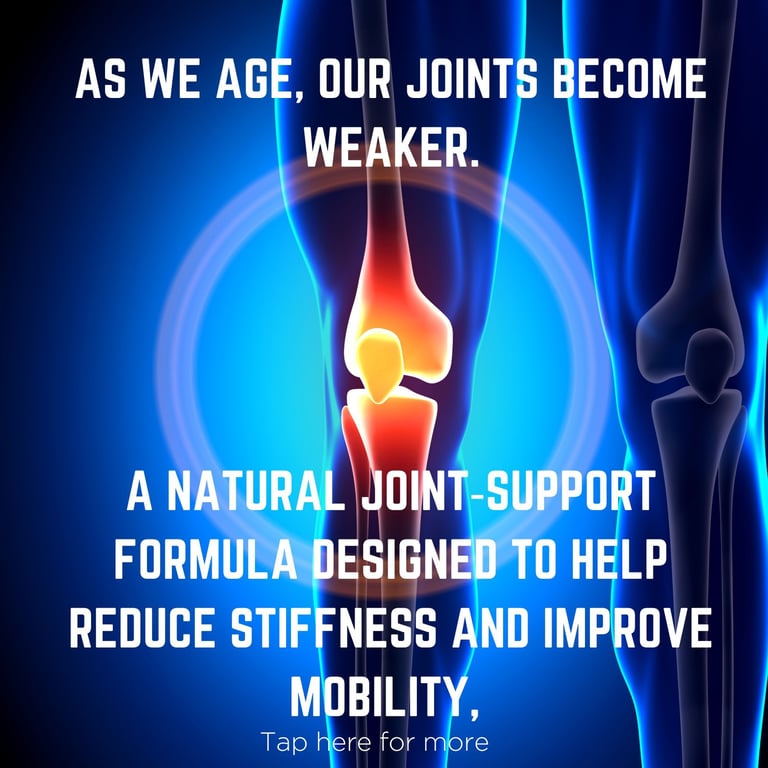
A gentle, natural joint‑support formula designed to help reduce stiffness, nourish cartilage, and support smoother movement throughout the day.




What Causes Joint Problems? (Scientific Summary)
Joint discomfort happens when the tissues that support movement — cartilage, ligaments, and synovial fluid — become stressed, inflamed, or worn down. Common causes include:
Wear and tear: Over time, cartilage naturally thins, reducing cushioning between bones.
Inflammation: Conditions like arthritis or lifestyle stress can trigger swelling and stiffness.
Low collagen levels: Collagen supports joint structure; levels decline with age.
Inactivity: Long periods of sitting weaken muscles that protect the joints.
Overuse: Repetitive movements or heavy lifting can strain joint tissues.
Poor posture: Misalignment increases pressure on knees, hips, and spine.
Excess weight: Extra body weight adds stress to weight‑bearing joints.
Nutrient deficiencies: Low levels of omega‑3s, vitamin D, and antioxidants can affect joint comfort.
What Helps Improve Joint Health? (Scientific Summary)
Better joint health comes from reducing inflammation, strengthening supportive tissues, and improving mobility. Science‑supported habits include:
Gentle daily movement: Walking, stretching, and mobility exercises keep joints lubricated and flexible.
Strength training: Strong muscles reduce pressure on joints and improve stability.
Anti‑inflammatory foods: Omega‑3s, leafy greens, berries, and turmeric help reduce swelling.
Healthy weight: Reduces stress on knees, hips, and lower back.
Hydration: Water supports synovial fluid, which cushions and lubricates joints.
Collagen & joint supplements: Can support cartilage, flexibility, and comfort.
Heat therapy: Warmth relaxes muscles and increases blood flow to stiff joints.
Proper posture: Helps align the body and reduce unnecessary joint strain.




Healthy Joints — FAQ Section
1. Why do my joints feel stiff in the morning?
Morning stiffness often comes from inflammation, reduced overnight movement, or natural age‑related changes in cartilage and joint fluid. Gentle stretching and daily movement usually help ease it.
2. What causes joint cracking or popping?
Most joint sounds come from gas bubbles in the joint fluid or tendons moving over bone. It’s usually harmless unless accompanied by pain or swelling.
3. Why do my joints hurt when the weather changes?
Changes in air pressure can affect joint tissues, especially if they’re already inflamed. Many people with arthritis or joint sensitivity notice this.
4. Can diet affect joint pain?
Yes — processed foods, excess sugar, and trans fats can increase inflammation. Anti‑inflammatory foods like omega‑3s, berries, leafy greens, and turmeric may help reduce discomfort.
5. Does exercise make joint pain worse?
Not usually. Gentle movement strengthens muscles around the joints, improves flexibility, and reduces stiffness. High‑impact exercise may worsen pain for some people, but low‑impact movement is beneficial.
6. Why do joints get worse with age?
Cartilage naturally thins over time, collagen levels drop, and joint fluid becomes less effective. These changes can reduce cushioning and increase stiffness.
7. Can supplements help joint comfort?
Some people find relief from collagen, glucosamine, chondroitin, turmeric, or omega‑3s. They’re not cures, but they can support comfort and mobility.
Healthy Joints — Myth vs Fact
Myth 1: Joint pain is just part of getting older.
Fact: Age plays a role, but inflammation, diet, posture, and activity level have a huge impact. Many people reduce joint pain with lifestyle changes.
Myth 2: If your joints hurt, you should avoid exercise.
Fact: Movement is one of the best things for joint health. It increases lubrication, strengthens support muscles, and reduces stiffness.
Myth 3: Cracking your knuckles causes arthritis.
Fact: There’s no scientific evidence linking knuckle cracking to arthritis.
Myth 4: Only athletes get joint problems.
Fact: Anyone can experience joint discomfort — especially people who sit for long periods or have poor posture.
Myth 5: Joint pain always means permanent damage.
Fact: Many causes of joint pain are temporary, like inflammation, muscle tension, or overuse.
Myth 6: Heat and ice do the same thing.
Fact: Heat relaxes muscles and increases blood flow; ice reduces swelling and numbs pain. They serve different purposes.
⭐ Free Wellbeing Tips — Healthy Joints
🚶 1. Walk for 10 Minutes Daily
Gentle movement keeps joints lubricated and reduces stiffness. Even a short walk boosts circulation and helps nourish cartilage.
🧘 2. Stretch Your Hips, Back, and Legs
Tight muscles increase pressure on the joints. Try simple stretches:
hamstring stretch
hip flexor stretch
gentle spinal twist Just 2 minutes helps.
💧 3. Drink More Water
Synovial fluid — the natural joint lubricant — needs hydration. Small sips throughout the day support smoother movement.
😌 4. Relax Your Shoulders and Jaw
Stress tightens muscles around the neck and spine, increasing joint discomfort. Take 10 seconds to drop your shoulders and unclench your jaw.
🛏️ 5. Improve Sleep Position
Sleeping with a pillow between your knees (side sleeping) or under your knees (back sleeping) reduces pressure on hips and lower back.
🧍 6. Practice Good Posture
Poor alignment strains knees, hips, and spine. Quick check:
shoulders relaxed
chin slightly tucked
weight evenly on both feet
🌞 7. Get a Few Minutes of Sunlight
Sunlight supports natural vitamin D production, which helps bone and joint health. Even 5 minutes outdoors helps.
🪑 8. Stand Up Every 30–60 Minutes
Long sitting stiffens joints and weakens support muscles. A quick stand or stretch resets circulation.
🧊 9. Use Cold or Warm Compresses
If you have access to a simple cloth:
Warm relaxes tight muscles
Cold reduces swelling Both are free and effective.
🍎 10. Add One Anti‑Inflammatory Food Daily
Even without supplements, small choices help. Try:
berries
leafy greens
turmeric in warm water
nuts
olive oil
🧘♂️ 11. Practice Gentle Breathing
Stress increases inflammation and joint tension. Slow breathing calms the nervous system and reduces discomfort.
🦵 12. Strengthen With Simple Bodyweight Moves
Strong muscles protect joints. Try:
wall sits
seated leg lifts
gentle calf raises No equipment needed.


Best Foods for Healthy Joints (Comfort, Flexibility, Strength)
🐟 1. Omega‑3 Rich Foods (Inflammation Control)
Omega‑3s help reduce joint swelling, stiffness, and long‑term inflammation. Examples: salmon, sardines, mackerel, flaxseeds, chia seeds. Benefits: less joint pain, smoother movement, improved flexibility.
🍒 2. Antioxidant‑Rich Foods (Joint Protection)
Antioxidants fight oxidative stress that damages cartilage over time. Examples: blueberries, cherries, spinach, turmeric, green tea. Benefits: reduced inflammation, better recovery, long‑term joint support.
🥑 3. Healthy Fats (Lubrication & Cushioning)
Good fats help keep joints cushioned and reduce friction. Examples: avocado, olive oil, nuts, seeds. Benefits: smoother movement, reduced stiffness, better nutrient absorption.
🥬 4. Leafy Greens (Bone & Cartilage Strength)
Rich in vitamins and minerals that support joint tissue and bone density. Examples: spinach, kale, silverbeet, broccoli. Benefits: stronger joints, reduced wear‑and‑tear, improved mobility.
🍊 5. Vitamin C Foods (Collagen & Tissue Repair)
Vitamin C helps your body build collagen — essential for cartilage and ligaments. Examples: oranges, kiwifruit, strawberries, capsicum. Benefits: better joint cushioning, improved healing, reduced stiffness.
🫘 6. Plant‑Based Proteins (Muscle Support Around Joints)
Strong muscles protect joints from pressure and strain. Examples: lentils, beans, tofu, chickpeas. Benefits: better stability, reduced joint load, improved movement.
🧄 7. Anti‑Inflammatory Herbs (Natural Joint Comfort)
These herbs help reduce swelling and support joint mobility. Examples: turmeric, ginger, garlic. Benefits: less pain, improved flexibility, better circulation.
💧 8. Hydrating Foods (Joint Lubrication)
Hydration keeps cartilage cushioned and reduces grinding. Examples: watermelon, cucumber, oranges, leafy greens. Benefits: smoother movement, reduced stiffness, better joint comfort.


Healthy Joints — Expanded Section
Healthy Joints FAQs (Expanded)
1. Why do my joints feel stiff in the morning?
Morning stiffness often comes from reduced joint lubrication overnight, mild inflammation, or long periods of inactivity. Gentle movement, hydration, and consistent daily habits can help loosen joints more quickly.
2. Why do my knees hurt when I walk or stand?
Knee discomfort can be caused by worn cartilage, weak supporting muscles, inflammation, or excess pressure on the joint. Strengthening the muscles around the knee and reducing inflammation often improves comfort.
3. Why do my joints crack or pop?
Joint sounds are usually harmless. They happen when gas bubbles shift inside the joint or when tendons move over bone. If cracking comes with pain or swelling, a healthcare professional should check it.
4. Why do my joints ache when the weather changes?
Changes in air pressure can affect joint tissues, especially if they’re already inflamed. Staying warm, hydrated, and gently active helps reduce weather‑related discomfort.
5. Why do my fingers feel tight or swollen?
Swelling can come from inflammation, fluid retention, or repetitive strain. Gentle stretching, hydration, and reducing salty foods may help ease tightness.
6. Can stress affect joint pain?
Yes — stress increases inflammation and muscle tension, which can make joints feel stiffer or more sensitive.
7. Why do my joints hurt even though I don’t exercise much?
Low movement reduces circulation and joint lubrication, making joints feel stiff. Even small daily movements help keep joints comfortable.
8. Does age automatically mean joint pain?
Not necessarily. While cartilage naturally thins over time, daily habits like movement, hydration, and anti‑inflammatory foods can keep joints flexible and comfortable.
9. Why do my joints feel worse after sitting for a long time?
Sitting reduces blood flow and joint lubrication. Standing up every 30–60 minutes helps reduce stiffness.
10. How do I know if my joints are improving?
You’ll notice smoother movement, less stiffness, better flexibility, and more comfort during daily activities.
What Causes Joint Discomfort & What Supports Joint Health (Expanded)
What Causes Joint Discomfort
Joint discomfort can come from many everyday factors:
Inflammation in joint tissues
Low movement or long periods of sitting
Weak muscles around the joints
Cartilage wear over time
Stress increasing inflammation
Poor hydration reducing joint lubrication
Excess body weight adding pressure
Repetitive strain from daily tasks
Nutrient deficiencies (like low omega‑3s or vitamin D)
These factors make joints feel stiff, tight, or sore.
What Supports Healthy Joints
Healthy joints thrive when you support them with:
Gentle daily movement
Hydration to lubricate cartilage
Anti‑inflammatory foods
Stronger supporting muscles
Healthy weight management
Stretching and flexibility routines
Adequate rest and recovery
Stress reduction
Consistent daily habits
Small changes create long‑term comfort.
Best Foods for Joint Comfort (Expanded)
1. Anti‑Inflammatory Foods
Reduce swelling and support joint comfort. Examples: turmeric, ginger, berries, leafy greens, olive oil.
2. Omega‑3‑Rich Foods
Help reduce inflammation and support cartilage. Examples: salmon, sardines, walnuts, chia seeds.
3. Vitamin‑D Foods
Support bone strength and joint stability. Examples: eggs, fortified milk, sunlight exposure.
4. Hydrating Foods
Help maintain joint lubrication. Examples: cucumber, watermelon, oranges.
5. Collagen‑Supporting Foods
Support cartilage and connective tissue. Examples: bone broth, chicken skin, citrus fruits (vitamin C helps collagen formation).
6. Magnesium‑Rich Foods
Relax muscles and reduce stiffness. Examples: almonds, spinach, pumpkin seeds.
7. Whole Grains
Reduce inflammation compared to refined grains. Examples: oats, quinoa, brown rice.


Healthy Joints Statistics
1. Joint Discomfort
Around 25% of adults experience joint stiffness or discomfort.
Knee discomfort affects 1 in 5 adults.
2. Movement & Pressure
Carrying extra weight adds 4× more pressure to knee joints.
Even 10 minutes of daily movement improves joint comfort over time.
3. Inflammation & Lifestyle
Anti‑inflammatory foods can reduce joint discomfort by 10–20%.
Sitting too long increases stiffness by up to 30%..
Daily Habits That Improve Joint Comfort (Expanded)
1. Gentle Daily Movement
Walking, stretching, or light mobility exercises help lubricate joints and reduce stiffness.
2. Stay Hydrated
Water supports cartilage and reduces friction inside joints.
3. Warm Up Before Activity
Even simple tasks feel easier when joints are warmed up.
4. Strengthen Supporting Muscles
Strong muscles reduce pressure on joints and improve stability.
5. Reduce Inflammation
Anti‑inflammatory foods and stress reduction help calm joint tissues.
6. Maintain Healthy Weight
Less pressure on joints = less discomfort.
7. Take Breaks From Sitting
Standing every 30–60 minutes helps reduce stiffness.
8. Stretch Daily
Gentle stretching improves flexibility and reduces tightness.
9. Support Your Posture
Good posture reduces strain on knees, hips, shoulders, and spine.
10. Get Enough Sleep
Rest helps reduce inflammation and supports joint recovery.


Natural Joint Health Tips
Add anti‑inflammatory foods like berries, turmeric, and leafy greens
Stay hydrated to keep joints cushioned and lubricated
Move gently every day — walking, stretching, or light exercise
Strengthen muscles around your joints for better support
Avoid sitting for long periods to reduce stiffness
Use warm compresses to relax tight areas
Try omega‑3 rich foods like salmon, walnuts, or flaxseed
Maintain a healthy weight to reduce pressure on knees and hips
Practice slow, controlled movements to protect joint surfaces
Stretch your hips, back, and legs to improve flexibility
Explaining Joint Support
Healthy joints help you move comfortably, stay active, and enjoy daily life without stiffness or pain. When your joints are supported naturally, your body feels lighter, more flexible, and more stable. Natural joint care focuses on reducing inflammation, improving mobility, and keeping your cartilage strong — helping you stay comfortable as you move through your day.
⭐ Why Joint Health Matters
Your joints carry you through every movement — walking, bending, lifting, stretching, and even simple daily tasks. When joint health weakens, you may feel stiffness, discomfort, swelling, or reduced flexibility. Supporting your joints naturally helps protect cartilage, reduce inflammation, and maintain smooth movement, especially as you age or stay active.


Global Joint Health Overview
Joint comfort and mobility vary around the world, influenced by lifestyle, diet, activity levels, climate, and access to healthcare. While joint stiffness and discomfort are common everywhere, different regions experience different patterns based on how people live and move.
Western Countries
New Zealand, Australia, the United States, Canada, and Western Europe report higher rates of joint stiffness and inflammation, especially age‑related changes. Common contributing factors include:
Sedentary lifestyles and long hours sitting
Higher rates of weight‑related joint pressure
Processed foods and lower anti‑inflammatory diets
More awareness and diagnosis due to regular healthcare access
Knee, hip, and lower‑back discomfort are especially common.
Asia
Many Asian countries — including Japan, South Korea, and China — historically show lower rates of inflammatory joint conditions, though numbers are rising. Reasons include:
Diets rich in fish, vegetables, and anti‑inflammatory foods
More daily movement (walking, squatting, floor sitting)
Cultural practices like tai chi and yoga
Lower average body weight in some regions
However, modern urban lifestyles are increasing joint strain.
Africa
Some African regions report lower diagnosed rates, mainly due to limited access to joint‑related healthcare. Lifestyle factors include:
Higher daily physical activity
Lower processed food intake
Outdoor living and natural movement patterns
Urbanisation is beginning to increase joint strain in major cities.
Global Trends
Around the world, joint health is becoming a growing focus due to:
Aging populations
Increased sedentary lifestyles
Higher stress levels
Rising weight‑related joint pressure
More awareness of natural joint support
Hydration, movement, stretching, and anti‑inflammatory foods are becoming globally recognised as simple ways to support joint comfort.
Understanding Joint Health
Your joints help you move, bend, stretch, and stay active. Over time, they can become stiff, sore, or less flexible due to age, lifestyle, or everyday wear and tear. Supporting joint comfort naturally can help you stay mobile and feel better throughout the day.
Why Joint Comfort Changes Over Time
Natural aging
Reduced cartilage cushioning
Inflammation from stress or lifestyle
Repetitive movements
Low hydration
Muscle tension around the joints
These changes are common and happen gradually.


⭐ Common Causes of Joint Stiffness
Joint stiffness is something many people experience, especially in the morning or after long periods of sitting. It can come from everyday habits, natural aging, or simple lifestyle factors. Understanding the common causes helps you support your joints and stay comfortable throughout the day.
1. Natural Aging
As we get older, cartilage slowly thins and joints lose some of their natural cushioning. This can make movement feel tighter or less smooth.
2. Inflammation in Joint Tissues
Inflammation — even mild — can make joints feel stiff, warm, or sensitive. Diet, stress, and lifestyle all influence inflammation levels.
3. Long Periods of Sitting or Inactivity
When joints stay still for too long, lubrication decreases and tissues tighten. This is why stiffness is common after sitting or waking up.
4. Weak Supporting Muscles
Muscles around the joints help with stability and movement. When they’re weak, joints take on more pressure and can feel stiff.
5. Overuse or Repetitive Movements
Daily tasks like lifting, bending, or repetitive work can strain joints over time, leading to temporary stiffness.
6. Low Hydration
Water helps keep cartilage smooth and lubricated. Dehydration can make joints feel dry or tight.
7. Stress & Muscle Tension
Stress tightens muscles around the joints, especially in the neck, shoulders, hips, and lower back. This tension can reduce flexibility.
8. Weather & Temperature Changes
Cold weather or sudden pressure changes can make joints feel tighter or more sensitive.
9. Weight‑Related Pressure
Extra pressure on knees, hips, and ankles can increase stiffness, especially during movement.


⭐ Daily Habits for Flexible Joints
Flexible joints make everyday movement easier — walking, bending, stretching, lifting, and even sitting comfortably. These simple daily habits help keep your joints lubricated, supported, and moving smoothly.
1. Move Every Hour
Long sitting stiffens joints. A quick stand, stretch, or short walk keeps them lubricated and reduces tightness.
2. Drink Water Throughout the Day
Hydration supports the fluid that cushions your joints. Small sips often are better than big drinks all at once.
3. Stretch Your Hips, Back, and Legs
Gentle stretching reduces muscle tension around the joints. Just 2–3 minutes can improve flexibility.
4. Add Anti‑Inflammatory Foods
Berries, leafy greens, turmeric, olive oil, nuts, and salmon help calm inflammation that affects joint comfort.
5. Strengthen Supporting Muscles
Strong muscles protect your joints. Simple moves like wall sits, calf raises, or seated leg lifts work well.
6. Practice Good Posture
Alignment reduces pressure on knees, hips, and spine. Relax your shoulders, keep your chin slightly tucked, and distribute weight evenly.
7. Use Warmth to Relax Tight Areas
A warm cloth or shower helps loosen stiff muscles and improve joint mobility.
8. Take Short Walks Daily
Walking boosts circulation, nourishes cartilage, and keeps joints moving smoothly.
9. Reduce Stress Where You Can
Stress tightens muscles around the joints. Slow breathing or a few minutes of calm helps release tension.
10. Get a Few Minutes of Sunlight
Sunlight supports natural vitamin D production, which helps bone and joint health.

